
What to Consider When Choosing an Inflatable Pool? | ToyFlyer
- Why Choose an Inflatable Pool?
- First Criterion in Inflatable Pool Selection: Age Appropriateness
- How to Choose the Size of the Pool?
- Why is Water Capacity Important?
- How is Material Quality Assessed?
- Which Surface Should the Inflatable Pool Be Set Up On?
- What to Pay Attention to When Using in the Sun?
- Inflatable Pool Safety
- How to Clean an Inflatable Pool?
- How to Store an Inflatable Pool?
- Products Usable with Inflatable Pools
What to Consider When Choosing an Inflatable Pool?
Why Choose an Inflatable Pool?
As temperatures rise during the summer months, interest in products that allow children to cool off outdoors also increases. Inflatable pools offer a practical solution for families as they can be easily set up in gardens, terraces, balconies, or suitable open spaces.
These products are more economical compared to fixed pools and can be deflated and stored to take up less space when not in use. They come in various sizes suitable for different age groups, areas of use, and number of people.
Smaller models used as children's pools are shallower and more compact, while family pools can be larger with higher water capacity. Therefore, when selecting the right product, it is important to determine beforehand who and where the pool will be used.
First Criterion in Inflatable Pool Selection: Age Appropriateness
Not every inflatable pool model is suitable for all age groups. Age warnings on the packaging should always be checked when selecting a product.
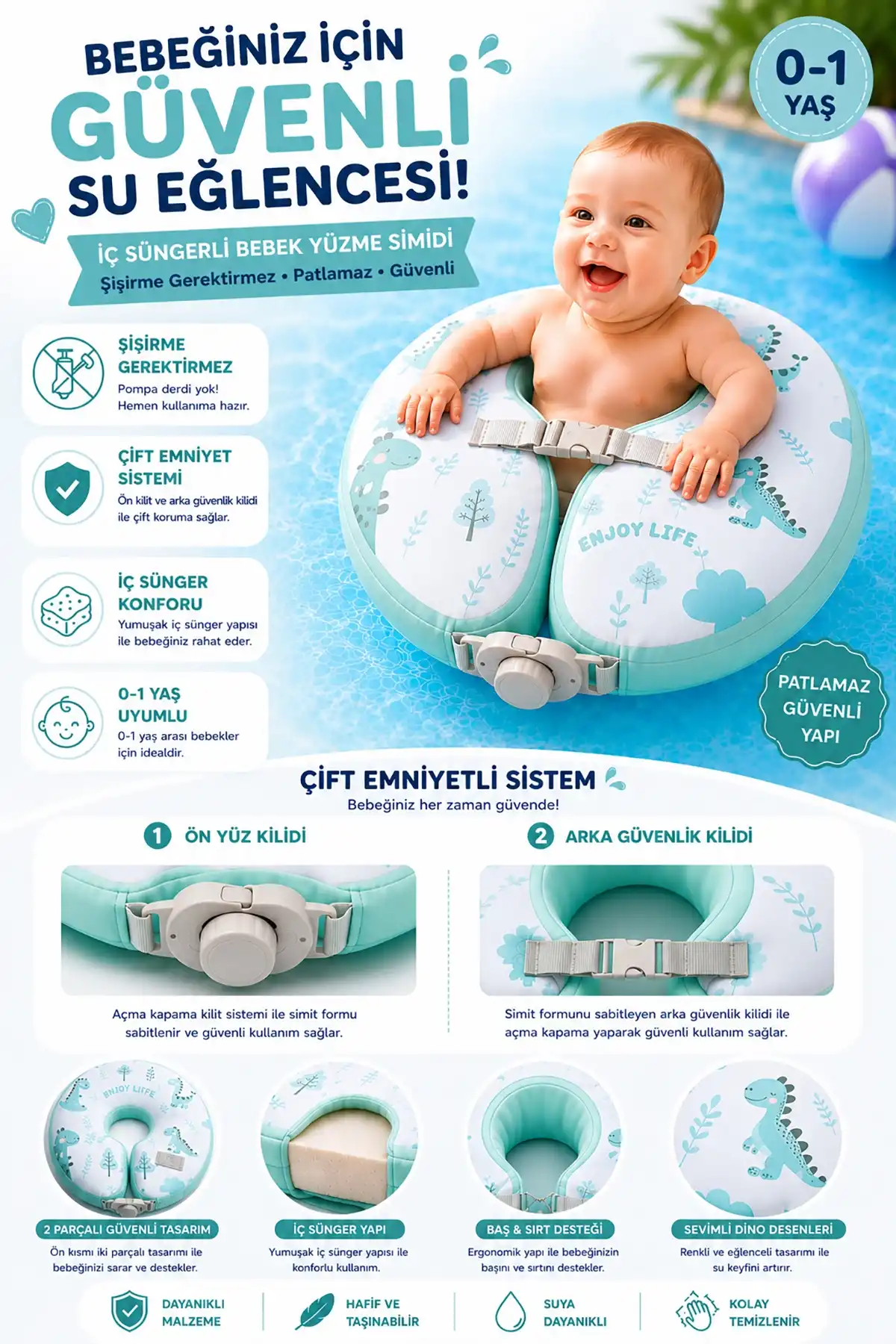
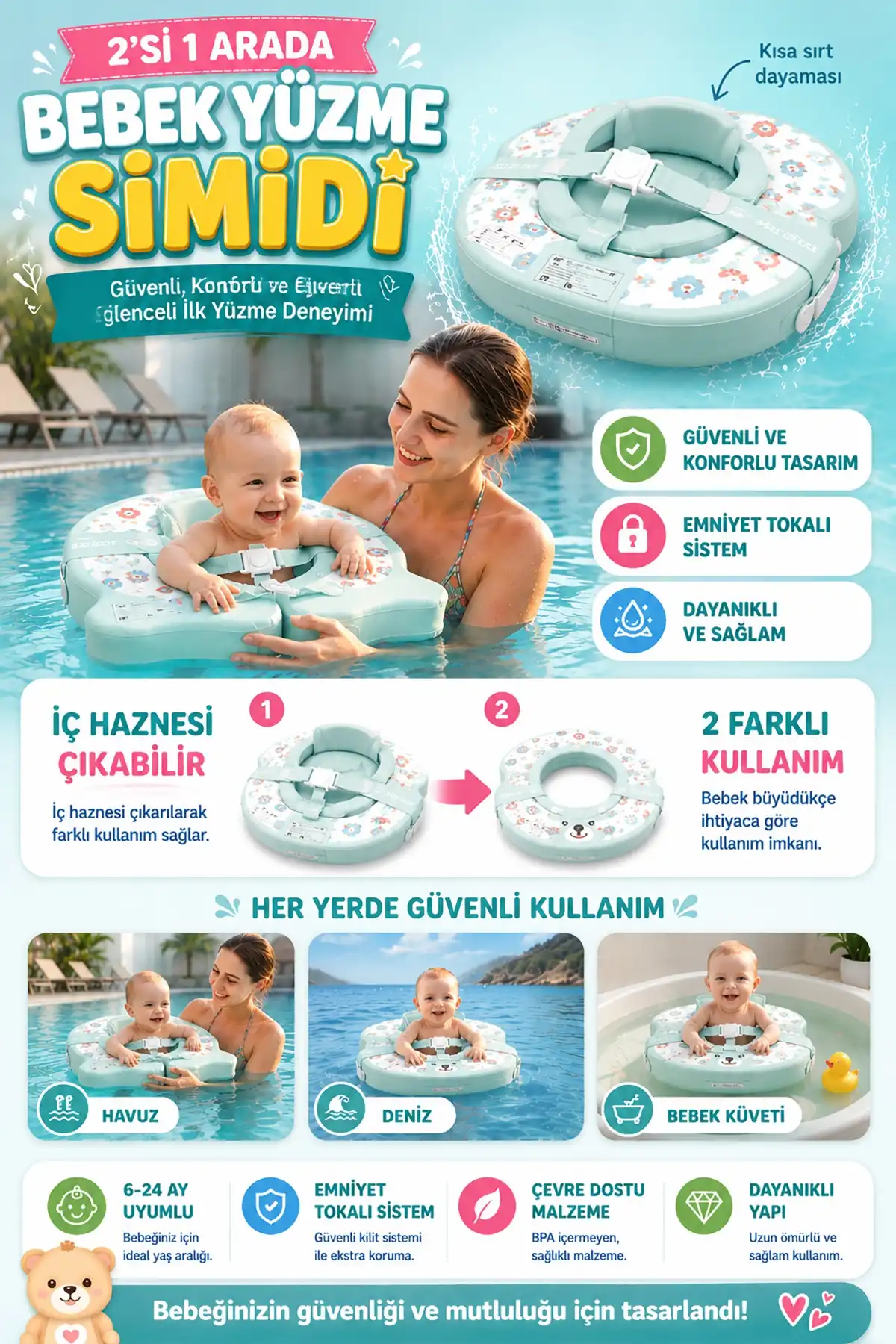
Inflatable Pool for Babies
Pools preferred for babies should be smaller, shallower, and have soft edges. The water level should be appropriate for the baby’s age and physical development.
The following features are important for baby pools:
- Low sidewalls
- Soft inflatable base
- Non-slip surface
- Sunshade design
- Small water capacity
Babies should never be left alone in or near water. Adult supervision should be constant as even a small amount of water can pose a risk to small children.
Pool for Children Aged 3 and Above
For older children, model selection should consider the movement space. Sizes allowing children to sit comfortably, play with toys, and move without bumping into each other should be preferred.
In this age group, models with colorful patterns, licensed characters, water spray systems, or play areas can increase children's interest.
Inflatable Pool for Family Use
If adults will also use the pool with children, larger and more durable models should be preferred. In family pools, thicker sidewalls, strong compartment construction, and durable base material are important.
How to Choose the Size of the Pool?
One of the most common mistakes in selecting an inflatable pool is buying the product without measuring the area of use. The product’s size and the total area required for setup are not the same.
Leaving at least a 50-100 centimeter empty safety area around the pool is beneficial. This space facilitates entry and exit and prevents the product from contacting walls, stones, pots, or sharp surfaces.
When measuring dimensions, the following points should be considered:
- The pool’s external diameter or outer size
- Height when inflated
- Space required for pump, drainage, and maintenance
- Safe entry and exit distance for children
- Whether the ground is completely flat
For example, a 150-centimeter diameter round pool will not be sufficient with just 150 centimeters of space. More room is needed to move around.
Why is Water Capacity Important?
As the size of the pool increases, the amount of water required also increases. Therefore, the water capacity should be checked before purchasing.
Filling a high-capacity pool takes longer. Also, emptying, cleaning, and refilling the water requires more time.
If usage frequency is low, opting for a more compact model instead of a very large pool might be more practical. An average-sized children’s pool is often sufficient for children’s short daily use.
When assessing water capacity, the pool’s fully filled state should not be the only consideration. The safe fill level indicated by the manufacturer should not be exceeded.
How is Material Quality Assessed?
Most inflatable pools are made of PVC or similar durable plastic materials. However, not every product has the same material thickness, joint points, and durability.
The following features should be sought in a quality inflatable pool:
- Strong welding seams
- Thick sidewalls
- Separate air compartments
- Strong air valves
- Tear-resistant base
- Presence of repair patch
- Clear product information
Models with multiple air chambers may offer an advantage. Even if one of the compartments loses air, the other compartments can partially maintain the form of the product.
Products with very thin and delicate materials can be more easily damaged when they come into contact with stones, gravel, branches, or hard surfaces. Therefore, the ground where the pool is set up must be prepared.
Which Surface Should the Inflatable Pool Be Set Up On?
One of the most important factors determining the lifespan of an inflatable pool is the surface it is set up on. The pool should be set up on a flat, clean, dry surface that is free of sharp objects.
Suitable surfaces include:
- Flat concrete surface
- Cleaned terrace
- Flat and dry grass area
- Garden surface covered with protective sheet
- Hard surface utilizing pool mat
Placing a protective ground sheet or pool mat under the pool reduces the risk of base damage. It also prevents the product from coming into direct contact with hot concrete or hard surfaces.
The water in a pool set up on a sloped ground accumulates on one side. This situation can cause uneven pressure on sidewalls. The shape of the pool can become distorted, increasing the risk of tipping over.
What to Pay Attention to When Using in the Sun?
Inflatable pools are typically used in open areas and can be exposed to sunlight for extended periods. However, leaving the product under intense sun all day can cause the material to deteriorate over time.
If possible, the pool should be set up in a semi-shaded area. Baby pools with sunshades provide extra protection for small children. However, the presence of a sunshade does not eliminate the need for sunscreen, hats, and suitable usage times.
During noon hours when sunlight is more intense, it is recommended that children do not spend long periods in water. It should also be remembered that pool water can quickly warm up under the sun.
Inflatable Pool Safety
Although inflatable pools are enjoyable summer products, safety rules must not be neglected. Continuous adult supervision is required especially for small children.
Children Should Not Be Left Alone
Even if the pool is very shallow, children should never be left alone. Adult supervision should not be interrupted by phone calls or other tasks.
Avoid Overfilling the Pool
Overfilling the product beyond the recommended water level places excessive load on the sidewalls. The water level should be suitable for the children's age.
Running and Jumping Should Be Prevented
Running around the pool increases the risk of slipping and falling. Children should not be allowed to sit on the edge of the inflatable pool, climb on it, or jump into it from a height.
Toys Should Be Age-Appropriate
Balls, water toys, and swimming products to be used in the pool should be suitable for the child's age. Products with small parts can pose a risk for small children.
How to Clean an Inflatable Pool?
Regular cleaning of the pool extends the product’s lifespan and provides more hygienic use.
In small children's pools, it is more appropriate to change the water frequently. After use, the water should be emptied, and the interior surfaces of the pool should be wiped with clean water and a soft cloth.
Heavy chemical cleaners can damage the product surface. The cleaning methods recommended by the manufacturer should be followed.
The pool should be completely dried before being stored. If folded while wet, the product may develop bad odor, stains, or mold.
How to Store an Inflatable Pool?
Proper storage of the pool at the end of the summer season prevents issues in the next usage period.
The following steps should be applied before storage:
- The pool water should be completely drained.
- The interior and exterior surfaces should be cleaned.
- The product should be completely dried.
- Air valves should be carefully opened.
- Air should be released gently.
- The pool should be folded without being too tight.
- It should be stored in a cool, dry, and shaded place.
Placing heavy objects on the product can damage the folds.
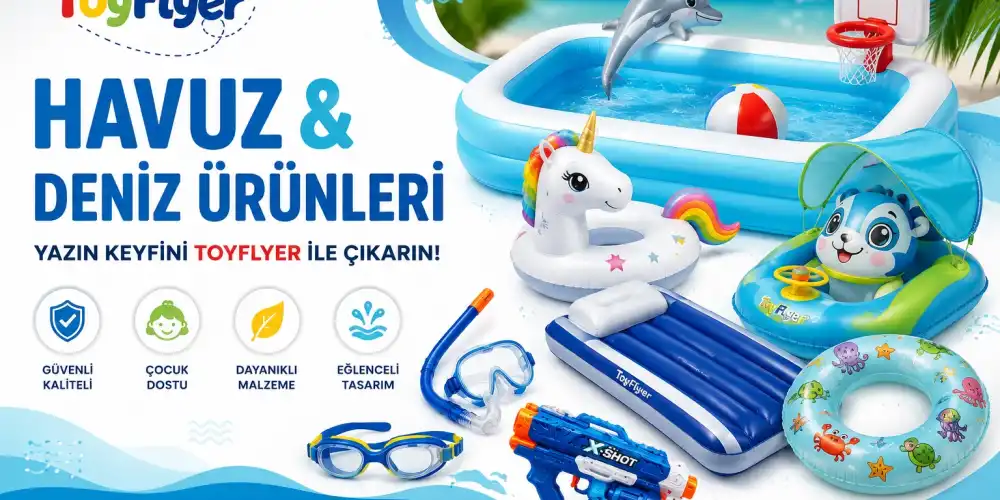
Products Usable with Inflatable Pools
Many auxiliary products make the inflatable pool experience more enjoyable and functional.
These include:
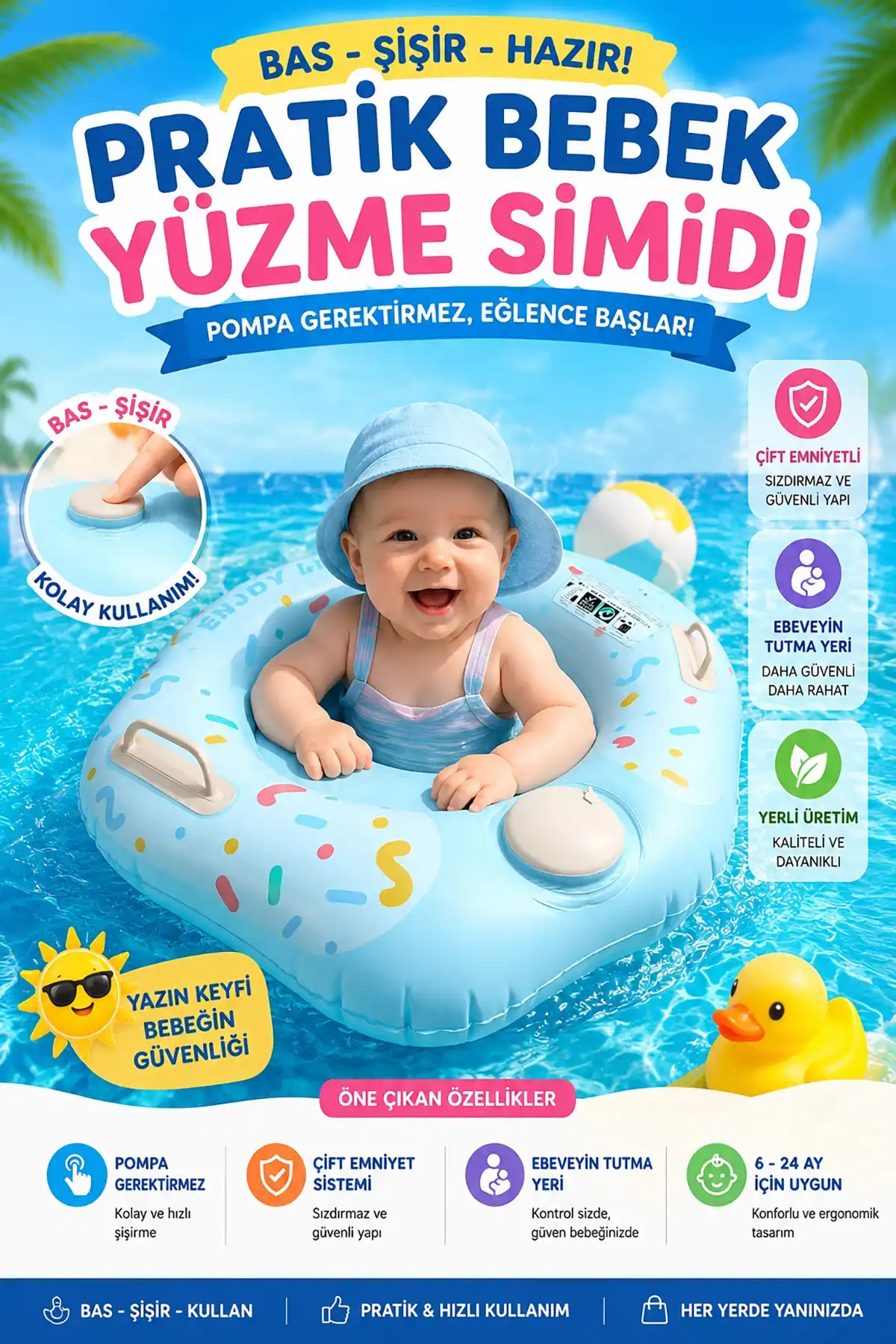
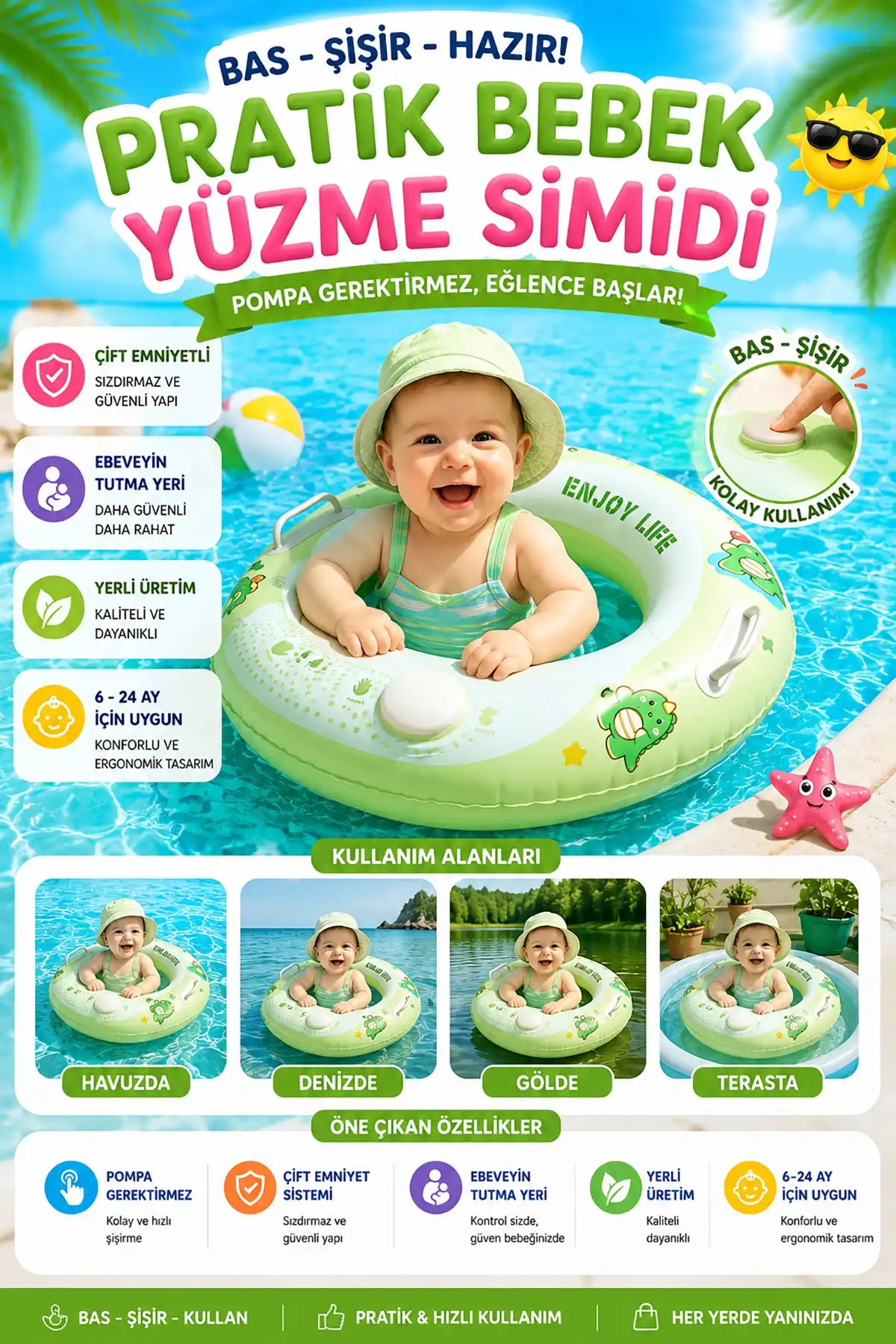
- Children's swimming rings
- Beach balls
- Water toys
- Ring toss games
- Foam toys
- Inflatable armbands
- Pool thermometer
- Why Doesn't the Foam Gun Produce Foam? Troubleshooting and Proper Use Guide
- What is Ring Toss Water Game? Timeless Toy that Enhances Children's Attention and Hand-Eye Coordination
- What is a Bubble Gun? How to Use It? | Fun Summer Toy Guide | ToyFlyer
- The Most Fun Outdoor Games for Children to Play During Summer Vacation
- The Most Fun Gift Toys for Children: Water Game
- Why Is Dental Health Important in Children? 5 Reasons to Protect Milk Teeth
- How to Encourage Your Child to Brush Their Teeth? Fun Solutions