
Why Doesn't the Foam Gun Produce Foam? Troubleshooting and Proper Use Guide

Automatic foam guns are one of the toys children enjoy using in the garden, park, birthday events, and outdoor games. When the trigger is pulled, the operation of the motor, the movement of the rotating head, and the quick formation of multiple bubbles make the game quite entertaining.
However, sometimes, even though the foam gun operates, it may not produce a sufficient number of bubbles. In some cases, you hear the motor running, but foam accumulates at the front part of the product. Sometimes, the gun works well initially, but its performance might reduce over time.
This does not always mean the product is defective. The performance of foam guns can be affected by many factors, from battery power to the solution used, the cleanliness of the nozzle, and how the product is held. When proper checks are conducted, most issues can be resolved quickly.
How Does a Foam Gun Work?
At the front of the automatic foam guns, there is a rotating or fixed head with multiple bubble outlets. When the product is operated, the motor activates the fan system and, depending on the model, the front head.
The rings on the head come into contact with the foam solution. The airflow created by the fan turns the thin solution layer on these rings into bubbles. For the system to work correctly, the motor needs to operate with sufficient power, the fan must be able to produce air, and the head must come into the right amount of contact with the solution.
Even if these parts seem to be working, a small issue such as weak batteries or solution concentration can significantly reduce bubble performance.
Check the Power of the Batteries
One of the most common reasons a foam gun does not produce bubbles is weak batteries. The product may emit motor noise and lights may be on, but that does not mean the batteries are providing sufficient power.
Weakening batteries prevent the fan from rotating at the necessary speed. When the fan operates slowly, there won't be a strong enough airflow to create bubbles. In this situation, solution can accumulate in the front part of the product or only a few bubbles may appear.
Especially in models operating with four AA batteries, it's recommended to use all new batteries of the same brand and power level. Using old and new batteries together can cause performance inconsistencies.
Rechargeable batteries with low charge levels may not provide sufficient motor power in some models. The first action to take when product performance drops is to replace the batteries with a completely new set.
Check Battery Polarity
If batteries are not inserted in the correct direction, the product may not operate at all or may function irregularly. The plus and minus signs on the battery compartment should be carefully observed.
If the battery cover does not close completely, there might be a contact issue. It should be ensured that the springs and metal contact points are intact. If liquid has contacted the battery compartment, the batteries should be removed, and the area completely dried out.
The product should not be operated while the battery compartment is wet as this can both damage the toy and pose a safety risk.
Use the Right Foam Solution
One of the most critical factors determining the foam gun's performance is the bubble solution used. Not every soapy water mixture will yield the same results.
Mixtures prepared using only dish soap and water can sometimes be too thick or too thin. Very thick mixtures can accumulate in front of the head, blocking the fan's airflow. Too watery mixtures can reduce bubble production as they cannot form a sufficient film layer on the rings.
Ready-made bubble solutions generally work more balanced with foam guns. If preparing a mixture at home, excessive detergent should not be used and the mixture should be prepared gently without creating foam.
Shaking the bottle vigorously before using the solution can cause dense foam inside the liquid. This foam can accumulate in the foam gun's head, reducing bubble output. The solution container should be handled gently, and as much foam-free liquid as possible should be used.
Clean the Foam Buildup in the Nozzle
During use, intense foam accumulation at the front can block the bubble outlets. Even if the fan runs, the airflow cannot move forward properly if the holes are blocked.
In such cases, release the trigger and turn off the product. Clean the accumulated foam on the front head with a soft, slightly damp cloth. After ensuring the holes are open, try the product again.
When cleaning the nozzle, sharp objects, needles, or hard brushes should not be used as such materials can damage the bubble rings or fan system.
Leaving solution on the head after use can produce sticky residue over time. Therefore, cleaning the front part after each game helps maintain product performance.
Position the Solution Container Correctly
In some foam gun models, the solution bottle is directly attached to the product. In other models, the front of the gun is inserted into a separate solution container.
In bottled models, the container must fit entirely into place. A crooked or loosely attached container can prevent the solution from reaching the nozzle consistently and may cause liquid leakage.
The solution container should not be overfilled. A too-full container can spill during movement, leading to liquid reaching the battery compartment. It is safer to fill it to the level specified in the product's usage instructions.
Hold the Product at the Correct Angle
Holding the foam gun too upward, downward, or sideways can affect solution delivery to the front head. Especially for models with liquid reservoirs, maintaining as upright or slightly forward-tilted as possible is recommended.
When the gun is tilted too much downward, excessive solution can accumulate at the front. If lifted too high, the head might not contact enough fluid.
For initial use, testing the product parallel to the ground or at the manufacturer’s recommended angle is the best approach. Instead of pulling the trigger in short bursts, holding it for a few seconds to let the motor run regularly may aid in bubble formation.
Check the Fan and Rotating Head
If pulling the trigger only lights up but doesn't move the fan or head, the issue may be with the batteries, motor connection, or mechanical part.
If the fan still doesn't rotate after replacing batteries, avoid forcing the product. There may be a foreign object, dried foam, or a small piece caught in the fan.
While the product is off, the front part can be visually inspected, but disassembling the motor part or forcing the fan to turn manually should be avoided. Opening a product under warranty can affect warranty conditions.
If the head moves but rotates very slowly, firstly use new batteries and clean any dried solution residues.
Essentials Before First Use
In a newly purchased foam gun, first check the battery compartment and insert the appropriate number of new batteries. Batteries are usually not included; thus, pay attention to the type of battery specified in the product description.
The solution container should be correctly placed, and the gun tested outdoors. It may take a few seconds for the head to absorb the solution initially. Not producing bubbles immediately after pulling the trigger doesn't always mean there's a problem.
Operating the product in an upright position for a few seconds can assist in the solution reaching the head. If bubbles emerge irregularly, check the batteries and solution again.
How to Clean a Foam Gun After Use?
After the game is over, remove the solution container from the product. The remaining liquid should not be left to sit for long, and if to be used, it should be stored in its own closed packaging.
The front part of the gun should be wiped with a slightly damp cloth, and any foam buildup should be cleaned. The toy should not be washed directly under water or submerged in water. The motor and battery compartment should not come into contact with liquid.
Once the product is completely dry, it should be stored in a cool and dry place. If not to be used for a long time, batteries should be removed. Leaving batteries in the product for extended periods increases the risk of leakage and damage to the battery compartment.
Efficient Usage Tips for ToyFlyer Foam Gun
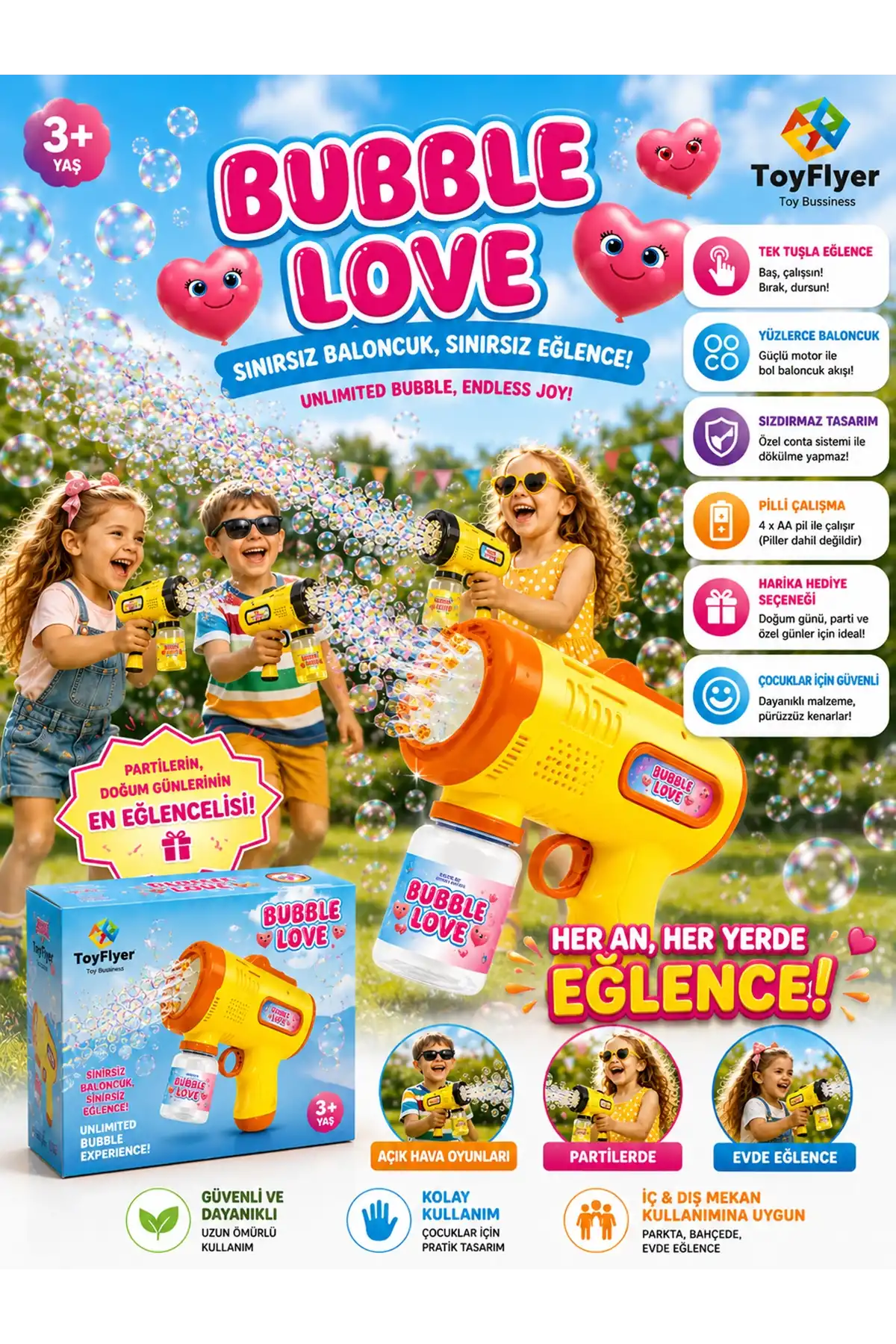
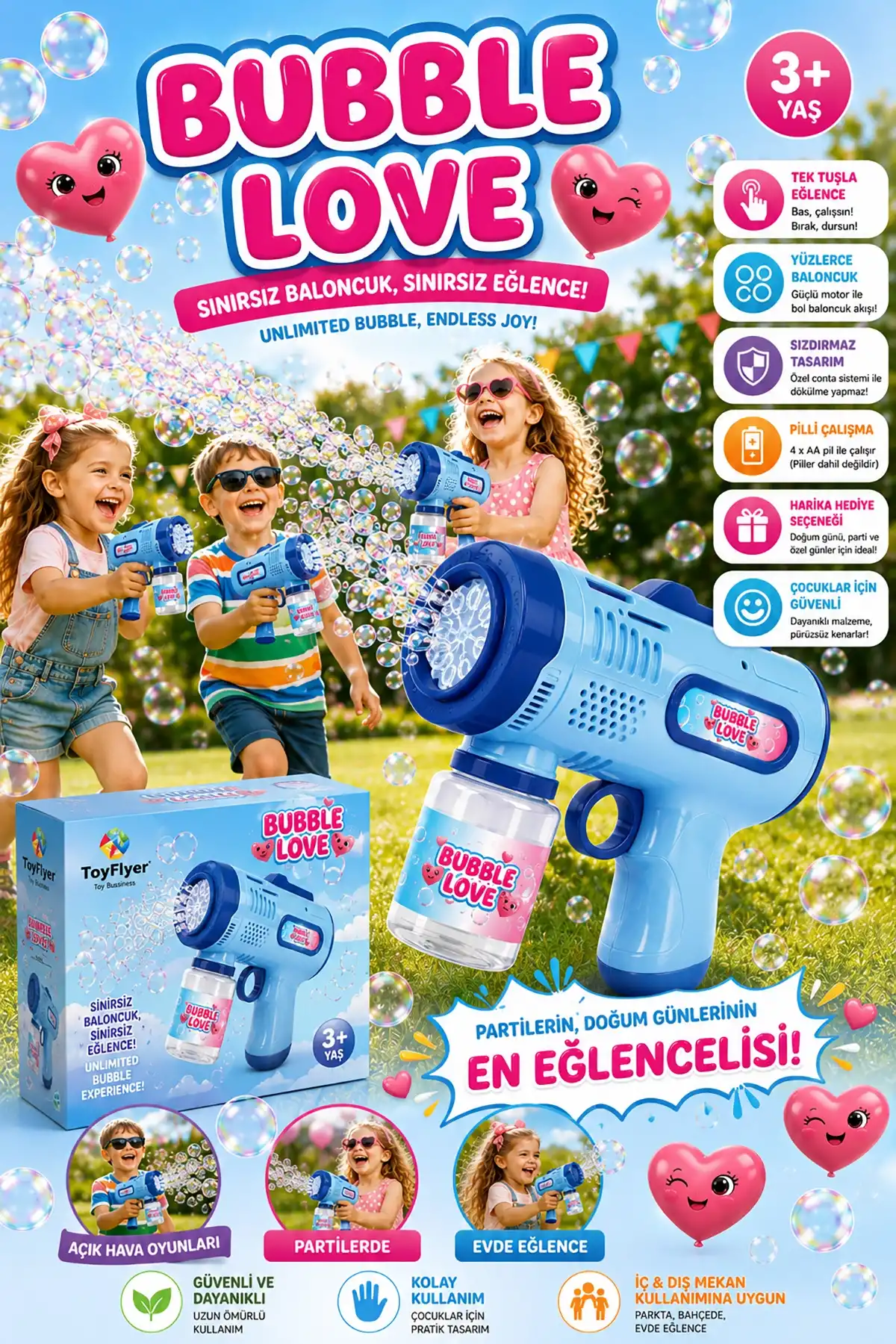
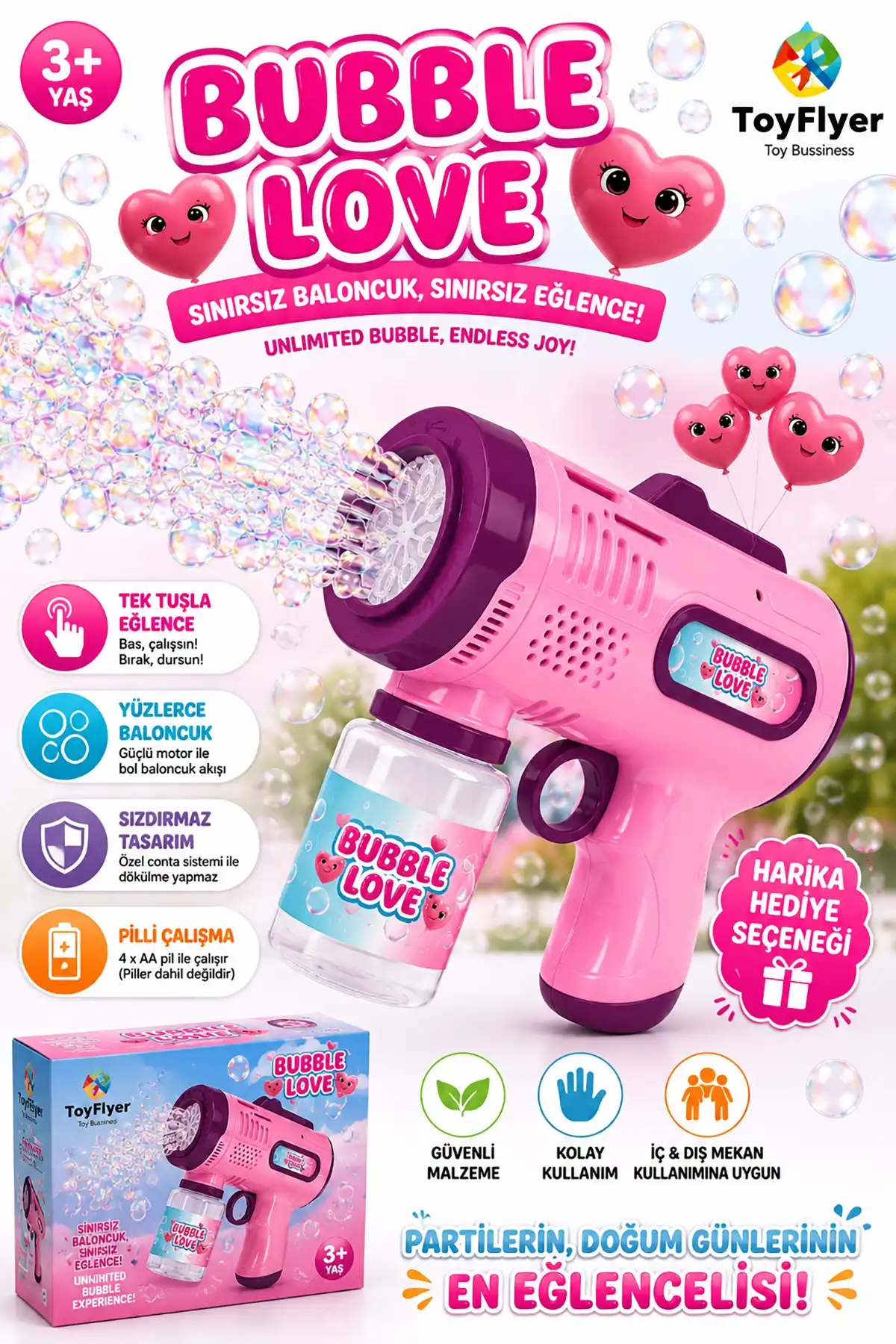
The ToyFlyer automatic foam gun, with its six-hole bubble head, light-up design, and battery-operated system, is designed to make children's outdoor play more fun.
The product operates with four AA batteries, which are not included in the package. For high performance, it's essential to use strong, new, and the same type of batteries together. Weak batteries can lead to solution buildup at the gun's tip and reduced bubble performance.
The product is suitable for children aged three and up. Adult supervision is recommended during use. Avoid contact of the solution with eyes and mouth, and do not aim the product very close to people's or animals' faces.
With the right batteries, appropriate solution, and regular nozzle cleaning, a more balanced bubble performance can be achieved with a foam gun. When the product doesn't work, it's advisable not to immediately assume it's faulty; instead, check the battery, solution, nozzle, and usage angle in order.
Still not working?Explore ToyFlyer outdoor toys.
- Why Doesn't the Foam Gun Produce Foam? Troubleshooting and Proper Use Guide
- What is Ring Toss Water Game? Timeless Toy that Enhances Children's Attention and Hand-Eye Coordination
- What is a Bubble Gun? How to Use It? | Fun Summer Toy Guide | ToyFlyer
- The Most Fun Outdoor Games for Children to Play During Summer Vacation
- The Most Fun Gift Toys for Children: Water Game
- Why Is Dental Health Important in Children? 5 Reasons to Protect Milk Teeth
- How to Encourage Your Child to Brush Their Teeth? Fun Solutions